Potty training without stress: tips for a relaxed approach
from Sarina
When is a child ready for potty training?
Most children become toilet trained between the ages of two and four. However, age itself is not the decisive factor. What matters more is the child’s individual readiness. Parents should pay attention to signs that their child is ready to begin.
Typical signs of readiness include:
Physical signs
The child can stay dry for longer periods of two to three hours, for example during a midday nap. They can walk, sit steadily, and may already be able to pull their clothes down independently. Some children show that they need to go by becoming restless, crossing their legs, or hiding when they are about to use their diaper.
Cognitive signs
The child understands simple instructions such as “sit on the potty” and can communicate (verbally or through gestures) when they need to go. They may also suddenly tell you or show you that they have already gone in their diaper.
Emotional and social signs
The child shows interest in the toilet or potty. They want to be “like the grown-ups” and may ask to wear underwear like “big kids.” They may also start to dislike having a wet diaper.
Starting too early or too late. Does it matter?
If parents start too early, the child may feel overwhelmed. The muscles controlling the bladder and bowels may not yet be fully developed. This can lead to frustration and may even delay the process.
If parents wait too long, some children may become accustomed to wearing diapers. In most cases, however, the timing regulates itself if parents observe and support their child. If a child clearly resists or accidents happen frequently, it is best to take a break and try again after a few weeks.
In fact, children today tend to become toilet trained slightly later than in the past. In many Western households, potty training now starts later. Reasons include the high quality of modern diapers, a more relaxed attitude toward developmental milestones, and the desire to avoid putting pressure on children. The often changing care arrangements in daycare and with different caregivers may also play a role.
When should you see a doctor?
In most cases, patience is the best strategy. However, medical advice should be sought if a child still regularly wets themselves during the day after the age of five, or has never been dry at night by the age of seven. Sudden regression or pain during urination are also warning signs.
Tips for stress-free potty training
Choosing the right moment
Start during a calm period when there is enough time and patience. The summer months are often particularly convenient. If a major change such as moving house, holidays, or the arrival of a new sibling is coming up, it may be better to wait a few weeks.
Daytime or nighttime training?
Most children become dry during the day first. Staying dry at night depends heavily on hormonal development and may happen much later. Until nights are consistently dry, mattress protectors and training pants can help.
Potty or toilet?
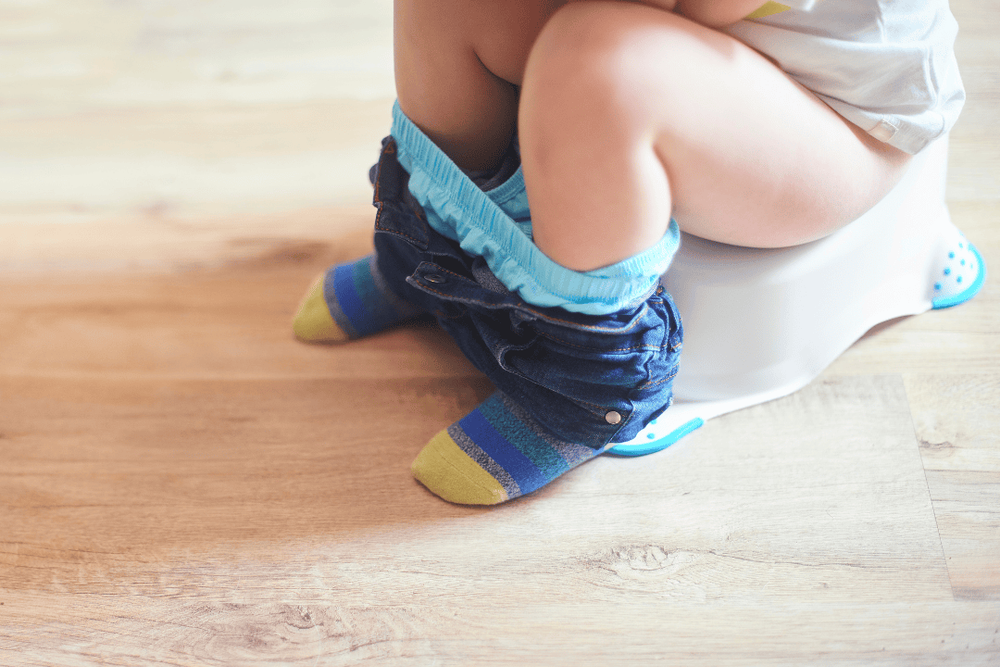
A potty offers stability and can be placed where the child feels comfortable, which creates familiarity and security. When the child is ready, they can gradually transition to using the regular toilet with a child seat and step stool. The most important thing is that the child feels comfortable.
Playful and without pressure
The most important thing is to stay relaxed. Offer the potty or toilet regularly, read stories, or let stuffed animals “join in.” For example, you can show a doll how to use the potty or toilet. Some children initially prefer to sit down while still dressed. That is perfectly fine too.
Cooperation

As clean as the grown-ups – with Kandoo toilet wipes
Kandoo toilet wipes stand for the highest quality, gentle care and independence for your child. They are the perfect size for little hands, yet large and soft enough to thoroughly clean a child’s bottom in one wipe. Made from strong natural fibres, they gently and effectively cleanse and dry the skin whilst maintaining its natural pH balance. Dermatologically tested and approved by paediatricians.
I can do it just like you with Kandoo!
Taking fears seriously
Fears during potty training are completely normal. You can introduce the potty in a playful way: let stuffed animals sit on it, look at suitable books together, or flush the toilet together. Small, playful steps help more than pressure. Forcing a child is counterproductive. Let your child get up at any time if they no longer want to sit.
Introducing routines
Do not ask your child every few minutes whether they need to go to the potty. That can be annoying and almost always leads to a firm “No!”. It is better to introduce clear routines. Encourage your child to go to the potty or toilet at specific times, for example after waking up, before going outside, before meals, or after a nap. If it is occasionally too late, that is part of the learning process. When your child has used the potty or toilet, let them become active themselves and, for example, wipe independently with moist toilet paper. This supports their growing independence.
Positive feedback and reward systems
Praise your child’s efforts, even when things do not always work out. Specific praise such as “You told me you needed to go!” strengthens and motivates them. Small rewards like stickers are fine, but they should not become the main incentive. More important is supporting the child’s inner motivation and helping them feel proud of themselves. This encourages the desire to become independent and capable.
Taking small steps
Once your child reaches a certain age (around two and a half to three years) and daytime potty training is going well, you can begin taking short outings without diapers. This strengthens confidence for both your child and you. The important thing is to stay consistent. Once you decide to leave the diapers off, try not to put them back on temporarily, for example during car rides.
Dealing with setbacks
Accidents are completely normal and part of the learning process. Stay calm and comfort your child. For example, you might say: “Your penis [or whatever word your family uses] did not manage it this time. That is okay, it will learn.” This reduces pressure and reassures your child that everything is fine. Avoid punishment or blame. Patience and trust help your child the most.
Allowing breaks
If your child shows resistance, it is better to pause the training for a few weeks. Pressure almost always leads to setbacks.
Every child is different
There is no single right way. Pay attention to your child’s signals, follow their interest, and adapt the pace individually.
Conclusion: every child has their own pace
Becoming toilet trained is an individual process that requires patience and trust. Parents can make the journey easier by noticing their child’s signals, responding calmly to accidents, and providing a sense of security.
Key points at a glance:
- Start when your child is ready, not based on a fixed age.
- Prepare your child playfully with words, books, and small rituals.
- Routines provide orientation, but stay flexible.
- Focus on daytime first. Nighttime dryness usually comes later.
- Start with the potty, then transition gradually to the toilet.
- Respond to resistance with patience and breaks.
- Handle accidents calmly and without pressure.
- Use rewards sparingly. Pride and self-confidence should be the focus.
- If progress stalls or stress arises, take a step back or seek advice.

Sarina is mum to two little boys and a stepmum to three older children, whom the little ones look up to. When all five are at home, the noise levels and fun factor go through the roof.
This blog post was published on 9 September 2025. It was produced in collaboration with the Swiss Professional Association for Parenting Advice.
Links:
www.projuventute.ch/de/eltern/entwicklung/podcast/kind-trocken
www.projuventute.ch/de/eltern/entwicklung/podcast/windeln-ade
Have you already known the famido app?

Download now and experience more
With famido you can experience more and pay less
Comments
Write the first comment