The pelvic floor: how pregnancy and childbirth affect it
from Laura

Soon after the birth, people commented on how fit I looked again, and I often didn’t dare to respond that not every injury is visible from the outside. There are structures in the body that need a long time to recover and that may never function quite the same as they did before pregnancy and birth. But the more I learned about the pelvic floor over time, the more optimistic I became. I realized that there are ways to strengthen the pelvic floor and to feel more comfortable in my body again.
In conversation with Cornelia Betschart Meier – senior physician at the Department of Gynecology at Zurich University Hospital (USZ), deputy clinic director and co-head of the Pelvic Floor and Continence Center – many questions about the pelvic floor are addressed. In a podcast episode, she also talks about postnatal recovery after birth.
What exactly is the pelvic floor and what functions does it have?
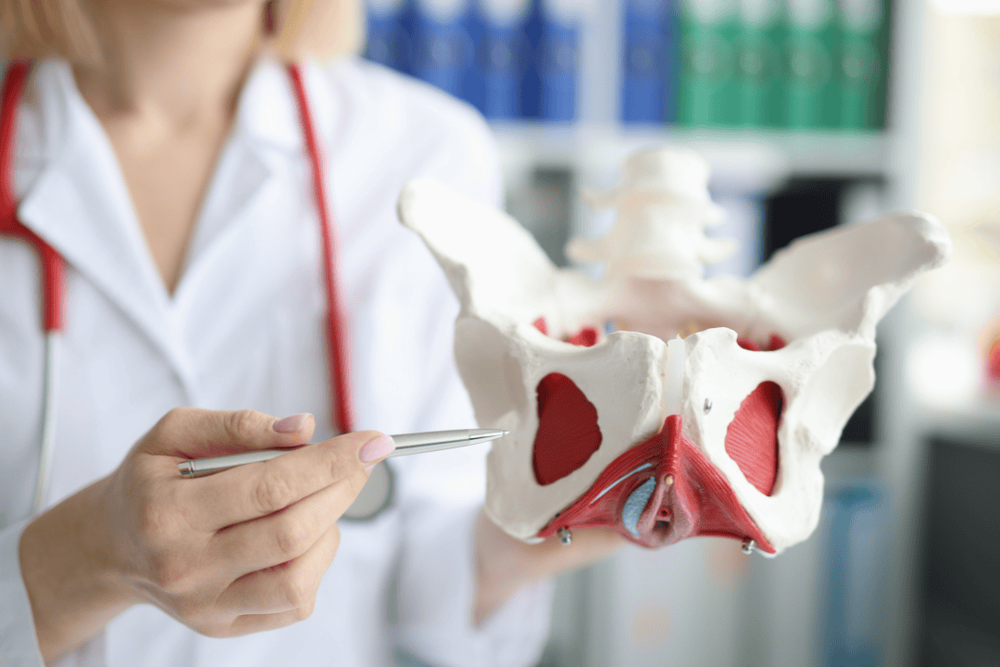
The pelvic floor supports the organs of the pelvis and forms the base between the pelvic bones. It consists of muscles and ligaments that hold the bladder, uterus, vagina and rectum in place. Because of this position, the pelvic floor fulfills several important functions. It helps us maintain bladder capacity, hold urine and empty the bladder in a controlled way. The pelvic floor also plays a role in sexuality (tension and relaxation) and in bowel movements, allowing us to control and delay them.
How do pregnancy and birth affect the pelvic floor?
Hormonal changes during pregnancy soften the tissues in preparation for birth. Because of this, urinary incontinence can already occur during pregnancy. Incontinence means the involuntary leakage of urine from the bladder, and more rarely stool from the rectum.
The pelvic floor is a relatively delicate muscle structure. During a particularly difficult birth, ligaments may also tear due to the strain. However, it is important to know that the amount of stretching the pelvic floor can tolerate varies greatly from person to person and can in principle be quite significant. Its resilience depends largely on the elasticity of the connective tissue as well as on the size and head circumference of the baby.
What symptoms related to the pelvic floor can occur after birth and for how long?
If a perineal injury that occurred during birth needs to heal, it can lead to discomfort. In about 90 percent of first births, there is some form of minor perineal injury. With subsequent births, perineal injuries occur less frequently.
More severe birth injuries are more often associated with bladder incontinence. This means that urine cannot be held as well after birth as before. This is the most common problem and may occur temporarily or persist over time.
However, the anatomical structures continue to recover for up to a year after birth, so patience is important. An evaluation can be done much earlier, though, because targeted physiotherapy can help strengthen the pelvic floor again. The good news is that in Switzerland the risk of severe perineal tears during birth has been significantly reduced in recent years.
When should women seek medical help for pelvic floor problems?
Basically, as soon as the problem becomes bothersome for them. It is not only about the quantity, meaning how many pads have to be changed. If the woman experiences distress, it is important to address the issue. Women have different expectations regarding their pelvic floor and their daily life.
What preventive measures can pregnant women take to strengthen their pelvic floor?
Physiotherapy is generally strongly recommended. That is why it is important to mention any problems during gynecological consultations so that opportunities for prevention are not missed. It is known that doctors do not routinely ask about pelvic floor problems.
During pregnancy, it is beneficial to stay physically active. Perineal massage can help prepare and stretch the perineum. When bending down, it is better to bend the knees and use the leg muscles when standing up. Good posture is also important because the back and pelvic floor tension are closely connected. As for endurance training, cross-country skiing, swimming and cycling are less stressful for the pelvic floor than jogging.
When can pelvic floor training begin after birth?
There are generally no strict restrictions. Once you feel fit enough, you can start again. This applies to pelvic floor training as well as to sports, usually between two and six weeks after birth.
What long-term consequences can untreated pelvic floor problems have?
Some women experience changes in their sexuality because of pelvic floor symptoms. Increased back pain can be associated with pelvic organ prolapse, as gravity puts more strain on the supporting ligaments. Problems with the bladder or rectum may also occur.
What treatment options are available for persistent pelvic floor problems?
There are incontinence pessaries (rings, tampons or cubes that can be inserted into the vagina to relieve the pelvic floor and improve its function). There are also medication-based treatments, especially for overactive bladder symptoms where constant urgency becomes burdensome, as well as various minimally invasive local procedures.
All these treatments and measures are covered by basic health insurance in Switzerland.
Are there common misunderstandings or myths about pelvic floor health after birth?
The idea that physiotherapy is harmful, or that one should simply wait and do nothing, is incorrect. The belief that sports or physiotherapy trigger premature labor is also false. Restrictions only apply in cases of actual premature contractions.
Another outdated belief is that women with pelvic floor problems should have a cesarean section in a subsequent pregnancy. This recommendation is no longer considered valid. The changes that are less favorable for the pelvic floor usually occur during the first birth, and the benefits of a natural birth outweigh the disadvantages for future children.
It is also a misconception that a cesarean section protects against all injuries and complications. This is not universally true.

Laura is a mum to a daughter and a son. She enjoys cycling around Bern with them, reading good books by the sandpit, or floating down the River Aare. As a freelance journalist and presenter, she loves exploring all sorts of topics that interest and inspire her – from personal stories to social and political issues. She likes to take a leaf out of her children’s book when it comes to curiosity about the big and small things in life.
This article was published on 13 January 2025.
Have you already known the famido app?

Download now and experience more
With famido you can experience more and pay less
Comments
Write the first comment